Is 1,000 mg of Glucosamine Enough? What Studies Used and What JointBrex Gives
Quick answer
1,000 mg is two-thirds of the 1,500 mg a day most studies used, and JointBrex gives exactly 1,000 mg per two capsules. But in the GAIT trial even 1,500 mg fell short of a significant win over placebo for knee pain, and the 2019 arthritis guideline recommends against glucosamine. Do not add capsules to reach a study dose.
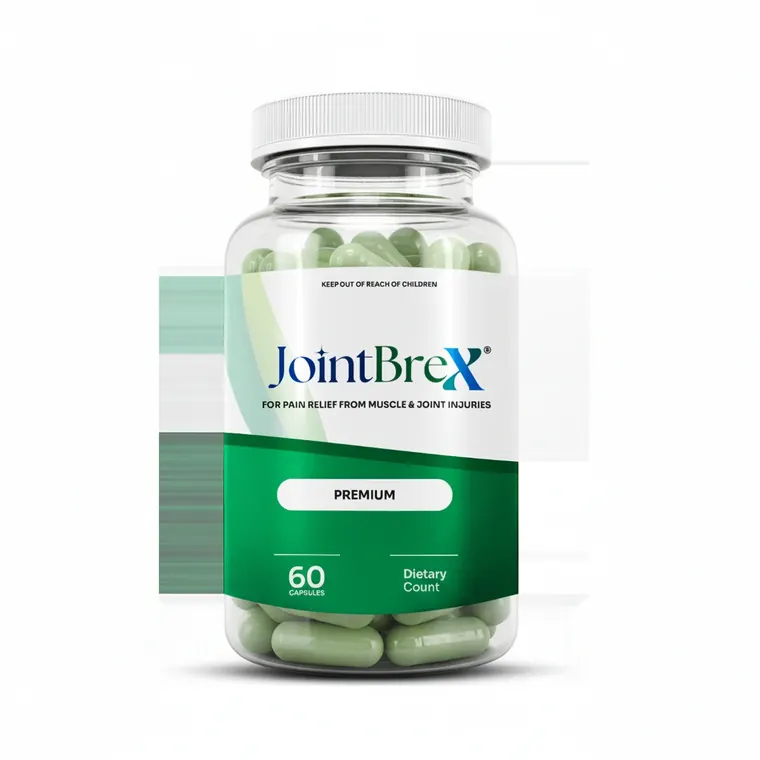
“Is 1,000 mg of glucosamine enough?” is one of the most common questions people type about joint capsules, and it applies directly to JointBrex, whose two-capsule serving holds exactly that. The honest answer has two parts: how 1,000 mg compares with the dose in studies, and what those studies found at the higher dose.
Is 1,000 mg of glucosamine enough?
It is less than the amount most studies used, and even that larger amount did not clearly work. Trials and package directions mostly use 1,500 mg a day, so 1,000 mg is two-thirds of the usual figure.
In the biggest US trial, 1,500 mg a day for 24 weeks failed to beat a dummy pill on knee pain by a significant margin (NEJM 2006, Clegg et al., GAIT trial). So “enough” is the wrong frame. A better question is whether any glucosamine dose is worth it for you, which is something to settle with your doctor.
Weighing up JointBrex? The lowest cost per bottle comes with the 6-bottle pack.
$49 a bottle in the 6-pack ($294). Free US delivery on 3 or 6 · 60-day refund window · BuyGoods checkout.
How many mg of glucosamine should you take per day, according to studies?
Most research and most bottles land on 1,500 mg a day. Three independent sources agree on that figure, and the count-up below shows what the largest trial looked like.
GAIT ran at 16 US sites with NIH funding and compared glucosamine, chondroitin, both together, the prescription painkiller celecoxib and a dummy pill (NIH news release, GAIT results (2006)). Cochrane notes that package labels usually say 1,500 mg a day, taken as 500 mg three times (Cochrane 2005, Towheed et al., Glucosamine for osteoarthritis), and LiverTox gives the same usual dose (LiverTox (NIDDK), Glucosamine).
That 60.1% placebo figure matters. Roughly 6 of every 10 placebo takers got a 20% drop in knee pain, so a supplement has to beat a high bar before its effect shows up at all.
How does the JointBrex label compare with study doses?
Boswellia is the one JointBrex amount inside a studied range. Glucosamine comes next, at 67% of the GAIT dose, and the rest sit far below. Each bar shows the label amount as a share of the lowest dose used in human studies.
Label: 1,000 mg. Studied: 1,500 mg daily, the GAIT trial and most package directions. (NEJM 2006, Clegg et al., GAIT trial) (Cochrane 2005, Towheed et al., Glucosamine for osteoarthritis) (LiverTox (NIDDK), Glucosamine)
Label: 100 mg. Studied: 1,200 mg daily in GAIT; LiverTox lists 600 to 1,200 mg. (NEJM 2006, Clegg et al., GAIT trial) (LiverTox (NIDDK), Glucosamine)
Label: 133.3 mg. Studied: 100 to 250 mg daily of branded, AKBA-enriched extracts. (Cochrane 2014, Cameron and Chrubasik, Oral herbal therapies for OA) (BMC Complement Med Ther 2020, Yu et al., Boswellia meta-analysis)
Label: 100 mg. Studied: 93 mg to 2 g daily of absorption-boosted curcumin. (BMJ Open Sport Exerc Med 2021, Paultre et al., Turmeric/curcumin for knee OA) (Complement Ther Med 2021, High- vs low-dose curcumin in knee OA)
Label: 16.7 mg. Studied: 1,000 to 3,000 mg daily in common use. (Arthritis Foundation, Supplement and Herb Guide for Arthritis Symptoms)
Label: 16.7 mg. Studied: 500 to 2,000 mg per dose, up to three doses a day. (Arthritis Foundation, Supplement and Herb Guide for Arthritis Symptoms)
Do not close the gap by adding capsules. The label says not to exceed the recommended dose, and the bottle is built around two capsules a day: 60 capsules, 30 days. Our glucosamine sulfate page covers the ingredient in more detail.
Glucosamine sulfate vs HCl: which is better?
The evidence does not settle it. The Arthritis Foundation says GAIT used glucosamine hydrochloride (HCl), that Mayo Clinic researchers favor the sulfate form, and that one head-to-head study found no real difference (Arthritis Foundation, Glucosamine and Chondroitin for OA Pain).
The sulfate camp leans on Cochrane. Its review of 25 trials found pain benefit mainly in trials of one prescription glucosamine sulfate product, made by Rotta, while better-concealed trials and other preparations showed no benefit. The label saying “glucosamine sulfate” does not make a capsule the same as that prescription product.
| Source | Form and daily dose | What it found |
|---|---|---|
| GAIT, 2006 | Glucosamine (HCl, per the Arthritis Foundation), 1,500 mg | Not significantly better than placebo overall |
| Cochrane, 2005 | Mixed forms; labels usually 1,500 mg | Benefit mainly in trials of the Rotta sulfate product |
| Arthritis Foundation, 2022 | Sulfate vs HCl | One head-to-head study found no real difference |
| 2019 ACR/AF guideline | Any glucosamine | Recommended against for knee, hip and hand OA |
| JointBrex label | Sulfate, 1,000 mg | No study of this product exists |
The guideline line comes from NCCIH, which reports a strong recommendation against (NCCIH Clinical Digest, Arthritis and Complementary Health Approaches).
Is 1,000 mg of glucosamine too much?
Not by the usual standard. It is below the common 1,500 mg daily amount, and in trials side effects were mild, uncommon and about as frequent as with placebo, mostly an upset stomach. Four cautions apply at any dose, though.
- Shellfish allergy. Glucosamine is usually made from shellfish shells, and the JointBrex label says it contains crayfish. Do not take it without an allergist’s advice.
- Blood thinners. Regulators collected reports of INR rising in people on warfarin after they started glucosamine (Health Sciences Authority, Warfarin-glucosamine interaction reports). Ask before taking it with any anticoagulant.
- Blood sugar. Glucosamine may push blood sugar up and might make insulin resistance worse (Memorial Sloan Kettering, Glucosamine (About Herbs)). If you have diabetes, clear it with your doctor and keep an eye on your numbers.
- Glaucoma. The Arthritis Foundation says it may raise eye pressure.
The JointBrex side effects page covers the other seven ingredients, and our knee and hip care guide lists the non-pill steps with stronger backing.
Which is more important, glucosamine or chondroitin?
Neither did much on its own in GAIT, and chondroitin edged ahead on points. Here are the extra percentage points each group gained over placebo in reaching a 20% drop in knee pain.
| GAIT group | Daily dose | Points above placebo | Better than placebo? |
|---|---|---|---|
| Glucosamine | 1,500 mg | +3.9 | No |
| Chondroitin | 1,200 mg | +5.3 | No |
| Both together | 1,500 mg + 1,200 mg | +6.5 | No |
| Celecoxib (drug) | 200 mg | +10.0 | Yes |
Chondroitin also holds the only positive line in the 2019 guideline: a conditional recommendation for hand OA (Arthritis Rheumatol 2020, Kolasinski et al., 2019 ACR/AF OA guideline (abstract)). A Cochrane review found it may ease pain slightly in the short term, mostly from low-quality trials (Cochrane 2015, Chondroitin for osteoarthritis). JointBrex gives 100 mg of it, about one-twelfth of the GAIT dose.
What should you ask your doctor about glucosamine dose?
Bring the bottle and these questions. They take five minutes and cover the points our sources flag.
- 1
Is a supplement worth trying at all?
Ask how it fits next to exercise, weight and the other steps the guideline backs more strongly.
- 2
Is my blood thinner a problem?
Name every medicine, including aspirin and over-the-counter pain relievers.
- 3
Does my blood sugar need watching?
Especially if you have diabetes or prediabetes.
- 4
How will we judge it?
Agree on what you will track, such as stairs or stiffness minutes, and for how long.
If you decide to try JointBrex, the 60-day refund window from purchase gives a natural check-in point; see the results timeline page for what studies measured over time.
Questions about glucosamine dose
Is 1,000 mg of glucosamine enough?
It is two-thirds of the 1,500 mg a day used in most studies. In the GAIT trial, even 1,500 mg did no significantly better than a dummy pill for knee pain.
How much glucosamine per day did studies use?
Mostly 1,500 mg daily, which package directions usually split into three 500 mg doses. GAIT used 1,500 mg once daily for 24 weeks.
Is 2,000 mg of glucosamine too much?
Our sources do not test 2,000 mg. Stay with the dose on your product label and ask your doctor before going higher.
Should I take three JointBrex capsules to reach 1,500 mg?
No. The label says do not exceed the recommended dose of two capsules a day.
Is glucosamine sulfate 1,000 mg better than HCl?
Not clearly. One head-to-head study found no real difference, and positive trials came mainly from one prescription sulfate product.
Do glucosamine 1,500 and chondroitin 1,200 work together?
Not in GAIT overall: the pair gained 6.5 points over placebo, which was not significant. An early hint of benefit in people with worse pain was described as preliminary.
What is the maximum dose of glucosamine?
Our sources give no maximum. They describe 1,500 mg a day as the usual amount, with mild side effects.
How much chondroitin is in JointBrex?
100 mg per two capsules, against 1,200 mg a day in GAIT and 600 to 1,200 mg in LiverTox.
Page check
Written by
Matches each amount to the printed Supplement Facts panel and each safety line to federal health agencies and Cochrane reviews.
- Reviewed against the label on October 13, 2026
- Sources: the Supplement Facts panel, the brand pages we opened, and the studies linked on this page
- Spotted a mistake? Email [email protected]. Our method is on the editorial standards page