How Does JointBrex Work? What Each Ingredient Was Studied For
Quick answer
JointBrex works through its eight ingredients, each studied on its own.
Most of the research was done in adults with knee osteoarthritis, often at higher doses or in special extracts. The capsule itself has not been tested as a whole.
See every amount on the ingredients page.
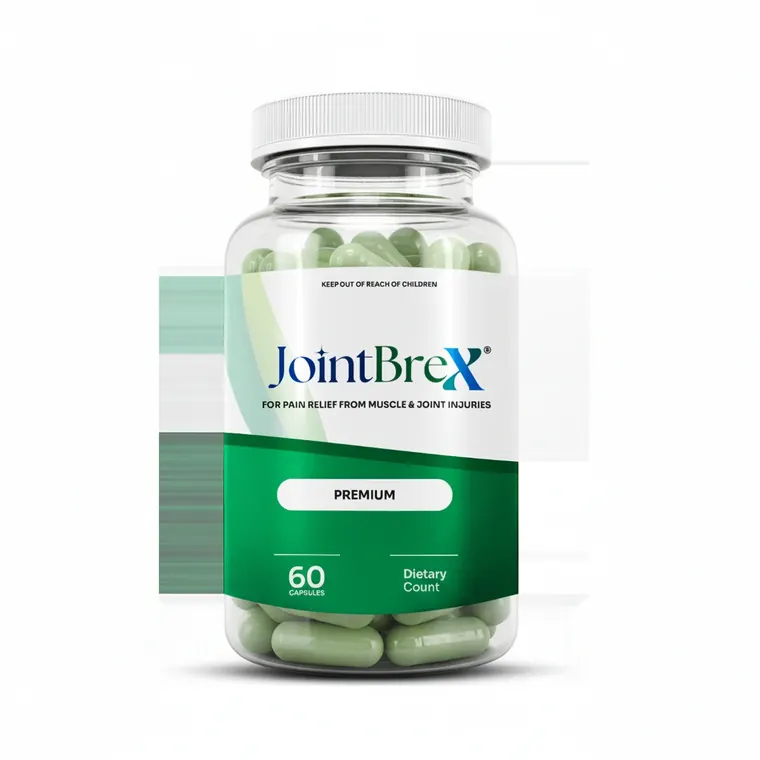
Does JointBrex really work? Nobody has tested the capsule itself
There is no published study of JointBrex. The sales page speaks of "clinically tested nutrients that support joint regeneration", but it cites no trial of the formula, and the reference list it shows is about blood sugar and weight products, not joints.
So the honest question is narrower: what were the eight ingredients tested for, at what doses, and did it work? The Federal Trade Commission tells sellers to ask exactly that, because a different dose or form can make a study irrelevant to the product being sold (FTC, Health Products Compliance Guidance).
What goes wrong inside a stiff, aching knee?
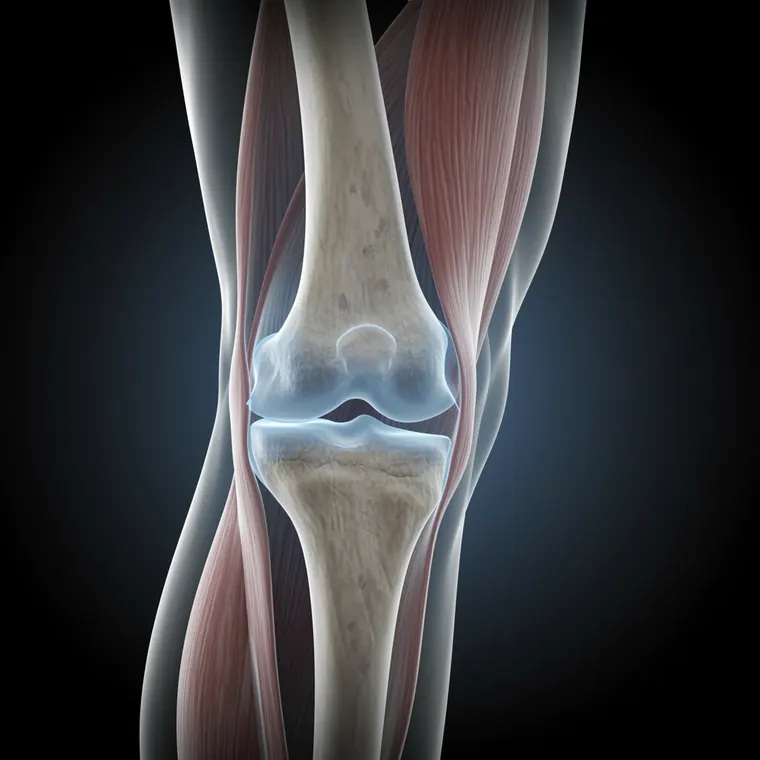
Osteoarthritis is a slow breakdown of joint tissue, and it is the most common kind of arthritis (NIAMS, Osteoarthritis (health topic)). It can change bone and cartilage, it most often hits hands, hips, back and knees, and about 33 million US adults live with it (CDC, Osteoarthritis).
Typical signs are pain, swelling and stiffness after rest that usually eases within 30 minutes. It cannot be cured, yet regular activity, a healthy weight and physical therapy help people manage it.
For a supplement to "rebuild" a knee, it would have to change that cartilage. That is the promise the sales page makes, and the one the research below does not support.
Weighing up JointBrex? The lowest cost per bottle comes with the 6-bottle pack.
$49 a bottle in the 6-pack ($294). Free US delivery on 3 or 6 · 60-day refund window · BuyGoods checkout.
What is each JointBrex ingredient studied for?
Tap an ingredient to see the question researchers asked about it and the daily amount they used. These are study results for the ingredient alone, never for this capsule.
Amino sugar, here made from crayfish
Glucosamine sulfate
Studied mostly for knee osteoarthritis pain. In GAIT it did not beat placebo overall; a Cochrane review found gains mainly in trials of one prescription brand.
Studied at: 1,500 mg a day for 24 weeks in GAIT. This label: 1,000 mg.
Tree resin extract
Boswellia
Tested for osteoarthritis pain and function using branded extracts enriched in one boswellic acid (AKBA). The trials were small and their results varied widely.
Studied at: 100 mg a day of an enriched extract for 90 days. This label: 133.3 mg, extract type not named.
Cartilage compound, source not stated
Chondroitin sulfate
Studied for knee and hand osteoarthritis. Cochrane found at most a slight short-term pain change, from trials that were mostly low quality.
Studied at: 1,200 mg a day in GAIT. This label: 100 mg.
Spice root powder
Turmeric root
The research used curcumin extracts built to absorb better, mainly for knee pain. NCCIH calls early results positive but not settled.
Studied at: 93 mg to 2 g a day of enhanced curcumin. This label: 100 mg of plain root.
Sulfur compound
MSM
A few small trials looked at joint pain and stiffness. The Arthritis Foundation notes that large, well-controlled human studies are missing.
Studied at: 1,000 to 3,000 mg a day in typical use. This label: 16.7 mg.
Enzyme from pineapple stem
Bromelain
Promoted for osteoarthritis, yet NCCIH lists no osteoarthritis evidence, and studies that mix it with other ingredients leave its own effect unclear.
Studied at: 500 to 2,000 mg three times a day. This label: 16.7 mg.
Plant flavonoid
Quercetin
Its anti-inflammatory effects come from lab dishes. We found no joint trial in people and no studied dose.
Studied at: No human joint dose found. This label: 16.7 mg.
Amino acid from food protein
Methionine
Ordinary meals supply it. We found no joint research on it, and we do not borrow results from SAMe, which is a different compound.
Studied at: No joint dose found. This label: 16.7 mg.
Sources: GAIT (NEJM 2006, Clegg et al., GAIT trial), Cochrane on glucosamine (Cochrane 2005, Towheed et al., Glucosamine for osteoarthritis), chondroitin (Cochrane 2015, Chondroitin for osteoarthritis) and herbal remedies (Cochrane 2014, Cameron and Chrubasik, Oral herbal therapies for OA), turmeric trials (BMJ Open Sport Exerc Med 2021, Paultre et al., Turmeric/curcumin for knee OA), NCCIH on turmeric (NCCIH, Turmeric: Usefulness and Safety) and bromelain (NCCIH, Bromelain: Usefulness and Safety), the Arthritis Foundation guide (Arthritis Foundation, Supplement and Herb Guide for Arthritis Symptoms) and MSK on quercetin (Memorial Sloan Kettering, Quercetin (About Herbs)).
Can JointBrex rebuild cartilage? The sales page says so; the evidence does not
No. The sales page says the formula "rebuilds and hydrates worn cartilage", yet NCCIH says it is "uncertain" whether glucosamine or chondroitin changes joint structure at all (NCCIH, Glucosamine and Chondroitin for Osteoarthritis). The GAIT structure study measured joint space width and saw no gap between the supplement groups and placebo.
- Marketing only
Rebuilds and hydrates worn cartilage
Sales page FAQNot on the label. No study of any of these ingredients at these amounts showed cartilage regrowing.
- Marketing only
Cartilage regenerators
Sales page FAQDescribes glucosamine and chondroitin. Chondroitin's best structural result was 0.18 mm less narrowing over two years, and the review page gives no doses.
- Marketing only
Fights chronic inflammation in the joints
Sales page FAQTurmeric trials used enhanced curcumin; MSK reports turmeric did not change knee effusion or cartilage makeup.
- Marketing only
Strengthens connective tissue and improves local circulation
Sales page FAQNo source we read measured circulation or tissue strength for any of these ingredients.
- Marketing only
Clinically tested nutrients that support joint regeneration
Sales pageNo trial is cited. The page's reference list covers blood sugar and weight products.
Even where a structural signal exists, NCCIH's clinical digest says it may be too small for patients to notice (NCCIH Clinical Digest, Arthritis and Complementary Health Approaches), and MSK found turmeric left cartilage composition unchanged (Memorial Sloan Kettering, Turmeric (About Herbs)). How these claims compare with the printed label is laid out on the JointBrex benefits page.
How close do two capsules come to the studied amounts?
Only one row reaches a studied amount. The rest range from two thirds of a trial dose down to a few percent, and two rows have nothing to compare with.
| Ingredient | Daily amount in research | In 2 capsules | Label as a share (our math) |
|---|---|---|---|
| Glucosamine sulfate | 1,500 mg (GAIT) | 1,000 mg | 67% |
| Boswellia extract | 100 mg enriched extract (Cochrane) | 133.3 mg | 133%, but the extract type is unknown |
| Chondroitin sulfate | 1,200 mg (GAIT) | 100 mg | 8% |
| Turmeric | 93 mg to 2 g enhanced curcumin | 100 mg root | Not comparable: root, not extract |
| MSM | 1,000 mg and up | 16.7 mg | 1.7% |
| Bromelain | 500 mg, up to 3 times a day | 16.7 mg | 3.3% of one dose |
| Quercetin | None found for joints | 16.7 mg | No yardstick |
| Methionine | None found for joints | 16.7 mg | No yardstick |
Form matters as much as milligrams. GAIT used glucosamine hydrochloride (Arthritis Foundation, Glucosamine and Chondroitin for OA Pain), Cochrane's positive glucosamine trials used one prescription preparation (Cochrane 2005, Towheed et al., Glucosamine for osteoarthritis), and the boswellia data come from named, enriched extracts. The full label is on the JointBrex Supplement Facts page, and each ingredient has a profile on the ingredients page.
What do arthritis guidelines recommend instead?
Movement first. A 2019 guideline from the American College of Rheumatology (ACR) and the Arthritis Foundation gives its strongest backing to these steps (Arthritis Rheumatol 2020, Kolasinski et al., 2019 ACR/AF OA guideline (abstract)):
- Exercise, matched to what your joints tolerate
- Weight loss for knee or hip osteoarthritis when overweight
- Tai chi
- Self-management and self-efficacy programs
- A cane, plus a hand or knee brace when it suits the joint
The same panel strongly recommended against glucosamine, as reported by NCCIH and a family-physician summary (Am Fam Physician 2020, Barry, summary of the ACR OA guideline). The CDC's target is at least 150 minutes of moderate movement weekly, with strength work twice a week (CDC, About Physical Activity and Arthritis). A practical plan is in our knee and hip care guide.
Questions about how JointBrex works
Has anyone tested whether JointBrex works?
No. Nobody knows, because the formula has never been studied. Its main ingredient, glucosamine, did not beat placebo overall in the 1,583-person GAIT trial.
How is JointBrex supposed to work, according to the brand?
The sales page says it rebuilds and hydrates cartilage, fights joint inflammation and improves circulation. None of these claims comes with a study.
Is JointBrex clinically tested?
Not as a product. "Clinically tested nutrients" refers to separate ingredient studies, mostly at higher doses or in special extracts.
Can glucosamine and chondroitin regrow worn cartilage?
The evidence points to no. NCCIH is unsure either one changes joint structure, and GAIT's structure substudy saw joint space width behave the same as on placebo.
Why does JointBrex contain so many ingredients in small amounts?
The brand does not say. Four of the eight rows are 16.7 mg each, under 5% of the serving together, far below any amount used in research.
Does quercetin help arthritis?
We found no human arthritis trial. MSK says the anti-inflammatory evidence comes from lab work, not from people.
Does JointBrex reduce inflammation?
No study shows that it does. A claim to reduce inflammation as a disease would be a drug claim, which a supplement may not make.
Why does the JointBrex sales page cite blood sugar studies?
Its reference list appears to be copied from another product. None of the listed papers is about joints or any ingredient on this label.
Page check
Written by
Matches each amount to the printed Supplement Facts panel and each safety line to federal health agencies and Cochrane reviews.
- Reviewed against the label on October 13, 2026
- Sources: the Supplement Facts panel, the brand pages we opened, and the studies linked on this page
- Spotted a mistake? Email [email protected]. Our method is on the editorial standards page