Knee and Hip Care Guide: What Helps Stiff Joints, and Where JointBrex Fits
Quick answer
For stiff knees and hips, the 2019 arthritis guideline strongly backs exercise, tai chi, weight loss if overweight, self-management programs, canes and knee braces. The CDC suggests 150 minutes of moderate activity a week plus strength work twice a week. Stiffness over 30 minutes or a hot, swollen joint needs a doctor. A supplement comes last, if at all.
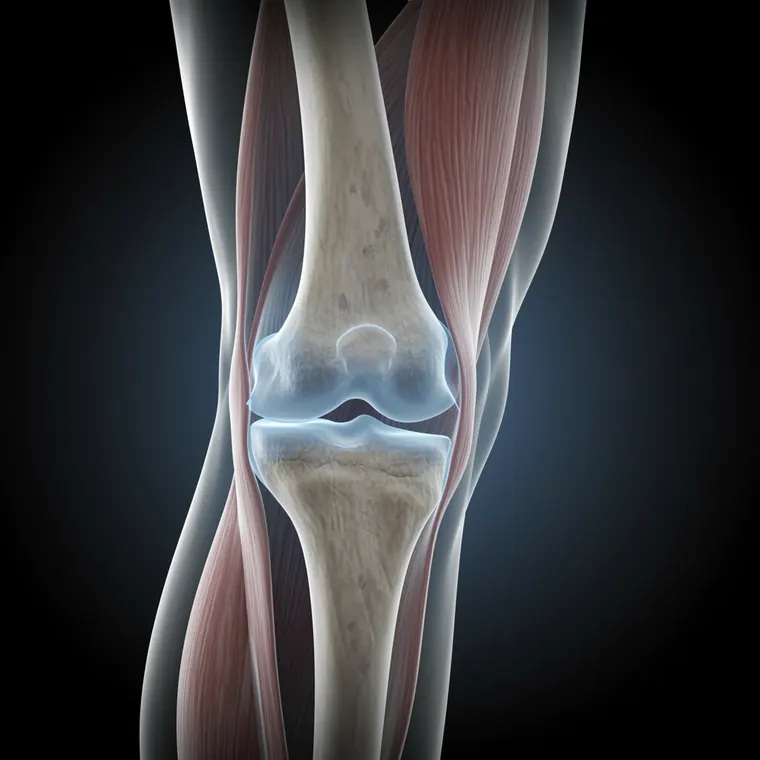
Getting up from a long movie, the first steps out of bed, the stairs after a car ride: that is when stiff knees and hips tend to complain. This guide sets out what public health agencies and the main US arthritis guideline suggest for those moments, which signs call for a doctor, and how small a part any capsule plays.
We sell JointBrex, so read the last section with that in mind. Everything before it applies whether you buy anything or not.
Why do knees and hips feel stiff after sitting or sleeping?
In older adults the most common reason is osteoarthritis (OA), where the tissues of a joint wear and change over time. Pain and stiffness after rest are its typical signs, along with some swelling and a smaller range of movement (NIAMS, Osteoarthritis (health topic)).
Knees and hips are two of the joints OA hits most, next to hands and the back. About 33 million US adults live with it (CDC, Osteoarthritis). There is no cure, but the CDC says there are proven ways to ease the symptoms, and most of them involve how you move.
That is why knee stiffness after sitting too long often eases once you walk a few steps: the joint warms up with use. Stiffness that does not ease is a different story, covered below.
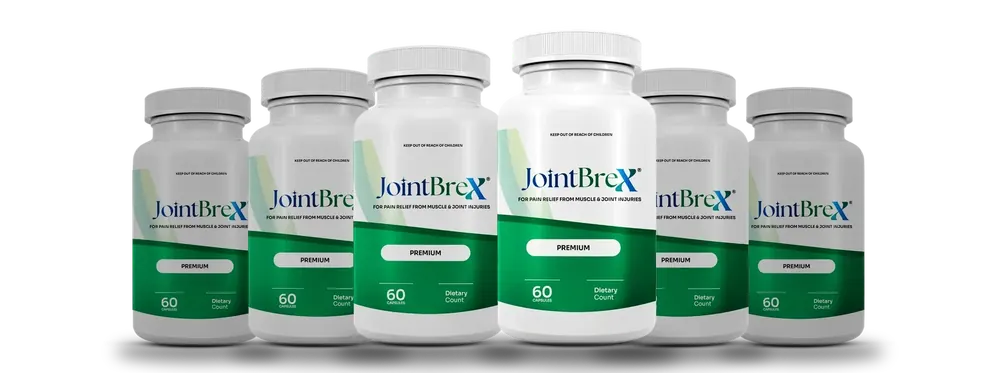
Weighing up JointBrex? The lowest cost per bottle comes with the 6-bottle pack.
$49 a bottle in the 6-pack ($294). Free US delivery on 3 or 6 · 60-day refund window · BuyGoods checkout.
What helps knee osteoarthritis besides supplements?
Movement, weight and know-how help most, according to the 2019 guideline from the American College of Rheumatology and the Arthritis Foundation. Its panel gave its firmest backing, a strong recommendation, to the items in this table (Arthritis Rheumatol 2020, Kolasinski et al., 2019 ACR/AF OA guideline (abstract)).
| What the guideline backs | Strength of backing | What it can look like in a normal week |
|---|---|---|
| Exercise | Strong | Walking, cycling, water exercise or a supervised class, built up slowly |
| Weight loss, if you are overweight | Strong, for knee and hip OA | A modest, steady loss planned with your doctor |
| Tai chi | Strong, for knee and hip OA | A slow, standing class that also trains balance |
| Self-management programs | Strong | A course that teaches pacing, goal setting and flare plans |
| Cane | Strong | Chosen and practiced with a physical therapist |
| Knee brace | Strong, for the knee | A brace chosen with a clinician for the side that hurts |
The same panel also strongly recommended some medicines, such as anti-inflammatory gels for the knee, which are a conversation for your doctor. A summary in a family medicine journal stresses that the panel wanted these pieces used together, not one at a time (Am Fam Physician 2020, Barry, summary of the ACR OA guideline).
NIAMS describes the same starting point: education and a supervised exercise program with stretching, strengthening, water-based work and balance training, plus weight management. Massage and acupuncture are things to talk over with a doctor first (NIAMS, Osteoarthritis: Diagnosis, Treatment, and Steps to Take).
How much activity does the CDC suggest for stiff knees and hips?
The CDC target for adults with arthritis is at least 150 minutes a week of moderate activity, plus muscle strengthening on at least 2 days. Older adults should add balance work. Bouts as short as 5 or 10 minutes count toward the total (CDC, About Physical Activity and Arthritis).
Split across a week, 150 minutes is about 22 minutes a day, or two 11-minute walks. Press play on the sample day below. The capsule step is optional and shown only because some readers use JointBrex; the gauge fills only if you take it.
Gauge: capsules taken today (the label serving is 2, before a meal). Dial: the time of day you picked.
Move each joint gently while still seated. Morning stiffness from OA usually fades within half an hour.
The JointBrex label says two capsules daily before a meal. Skip this step if you have a shellfish allergy or have not cleared it with your doctor.
A flat route at a pace where you can still talk. Low-impact walking is one of the CDC examples.
Stand and walk for a few minutes each hour, which helps knees that stiffen after sitting.
Exercises a physical therapist shows you, or a tai chi class. Start slowly and add a little each week.
That brings the day to 22 minutes, on pace for 150 a week.
If a new activity leaves you sore for days, or the pain keeps getting worse, the CDC advice is to contact a health care provider rather than push through it.
Is hip arthritis handled differently from knee arthritis?
Mostly no. Exercise, tai chi, weight loss if you are overweight and a cane are recommended for both, and NCCIH notes the strong tai chi recommendation covers the knee and the hip (NCCIH Clinical Digest, Arthritis and Complementary Health Approaches).
A few things differ. Knee braces and anti-inflammatory gels are knee steps. For supplements, the hip record is thin: a 2008 hip study that NCCIH describes found glucosamine sulfate no better than placebo (NCCIH, Glucosamine and Chondroitin for Osteoarthritis). Let a clinician confirm which joint is the source of the pain before you plan around it.
When is knee or hip stiffness a reason to see a doctor?
When it lasts, burns or swells. OA stiffness after rest usually lasts less than 30 minutes, so longer stiffness, joints that are red, hot or puffy, and new or worsening pain all deserve an exam.
Rheumatoid arthritis (RA) is a different disease from OA and is treated differently, so it needs a diagnosis rather than a guess. Our sources give no minute count that separates the two; the four questions below simply sort out who should call first.
Doctor first, or start moving?
Does your morning stiffness last longer than 30 minutes?
Is the knee or hip red, hot or swollen?
Is the pain new, or getting worse from week to week?
Are you allergic to shellfish and thinking of a glucosamine product?
Answer every question to see your result. Nothing is saved or sent.
Nothing here points to an urgent visit. Start with the weekly activity target and mention your joints at your next checkup.
Book a visit before you change anything. Long stiffness, heat, swelling or worsening pain needs a diagnosis, not a supplement.
Skip shellfish-based glucosamine. The JointBrex label lists crustacean shellfish (crayfish) as an allergen.
Where does a supplement like JointBrex fit in a knee and hip plan?

Last, and in a small way. The 2019 guideline was strongly against glucosamine for knee, hip and hand OA, as NCCIH and the AAFP report (NCCIH Clinical Digest, Arthritis and Complementary Health Approaches). In the GAIT trial, 1,500 mg a day of glucosamine did no better than placebo overall (NEJM 2006, Clegg et al., GAIT trial).
JointBrex gives 1,000 mg of glucosamine sulfate and 100 mg of chondroitin per day, about two-thirds and one-twelfth of the GAIT amounts. Its 133.3 mg of boswellia is the one amount inside a studied range, though the extract type is not named.
If you still want to try it, treat it as an add-on to the plan above, never a swap for it. Two cautions come first. The glucosamine is made from crayfish, so a shellfish allergy rules it out without an allergist's advice. And people on warfarin, apixaban (Eliquis) or another blood thinner should ask their clinician, because regulators have seen INR rise in warfarin users who took glucosamine (Health Sciences Authority, Warfarin-glucosamine interaction reports).
Our post on the 1,000 mg question compares the dose in depth, the JointBrex side effects page lists every caution, and the how to use page covers timing around meals.
Questions about stiff knees and hips
Why are my knees stiff after sitting too long?
In older adults the usual reason is osteoarthritis, where stiffness after rest is a typical sign. It tends to ease once you walk for a few minutes; stiffness that lasts or a hot, swollen knee needs a doctor.
What is the best exercise for stiff knees and hips?
There is no single best one. The CDC lists brisk walking, cycling, swimming, water exercise, dancing and tai chi, plus strength work at least 2 days a week.
How many minutes of exercise a week help arthritis?
At least 150 minutes of moderate activity a week, according to the CDC. Short bouts of 5 or 10 minutes count.
Does a cane really help knee or hip osteoarthritis?
Yes, it is one of the steps the 2019 ACR/AF guideline strongly recommends. A physical therapist can help you choose one and learn to use it.
Is tai chi good for hip arthritis?
Yes. The 2019 guideline strongly recommends tai chi for knee and hip osteoarthritis, as NCCIH reports.
Does losing weight help hip and knee pain?
For people who are overweight, the guideline strongly recommends weight loss for knee and hip OA. Plan the amount and pace with your doctor.
Is JointBrex relevant for hip pain?
It is sold for joint comfort in general, and no study of JointBrex exists. A 2008 hip study found glucosamine sulfate no better than placebo, so movement steps come first.
When should stiff knees in the morning worry me?
When the stiffness lasts longer than 30 minutes, the joint is red, hot or swollen, or pain is new or getting worse. Those signs need an exam, since rheumatoid arthritis is a different disease.
Page check
Written by
Matches each amount to the printed Supplement Facts panel and each safety line to federal health agencies and Cochrane reviews.
- Reviewed against the label on October 13, 2026
- Sources: the Supplement Facts panel, the brand pages we opened, and the studies linked on this page
- Spotted a mistake? Email [email protected]. Our method is on the editorial standards page