Do Joint Supplements Work? What 1,583 People, 24 Weeks and a 60.1% Placebo Response Show
Quick answer
Mostly not, in the best trial we have. In GAIT, 1,583 adults with knee osteoarthritis took glucosamine, chondroitin, both or a dummy pill for 24 weeks. Only the prescription drug celecoxib clearly beat the dummy pill. Boswellia and turmeric extracts show early signs. Exercise has the firmest guideline backing.
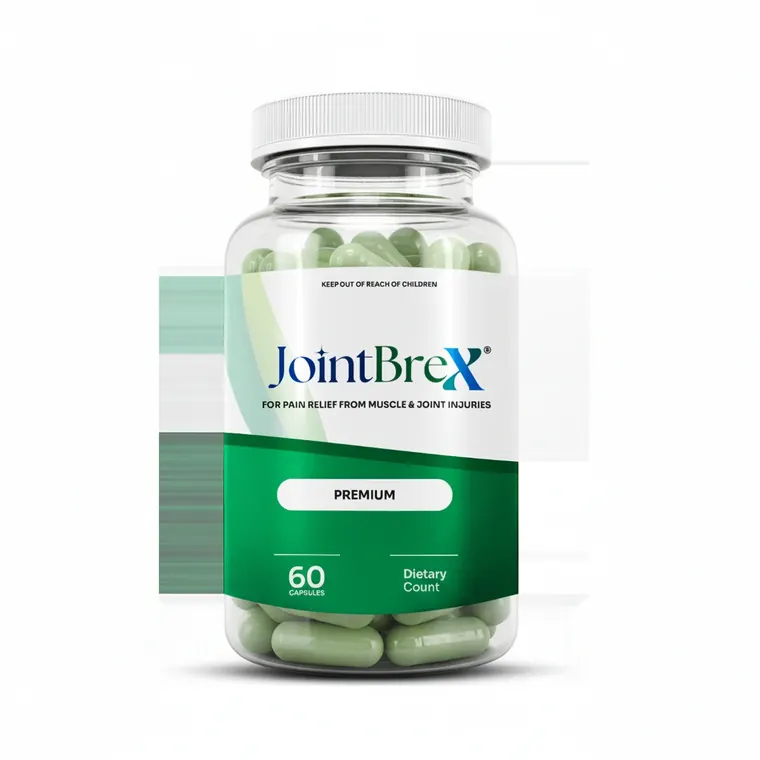
“Do joint supplements work?” is a question with a long answer, because the supplements differ and so do the studies. We boil it down to one trial, a few reviews and one guideline, all from sources named in the text.
We write for a site that sells JointBrex, so a closing section shows where its eight ingredients fall in the evidence. The rest of the post applies to any joint capsule.
What are the key facts on whether joint supplements work?
- GAIT was a large US trial: 1,583 adults with knee osteoarthritis, 24 weeks, funded by the NIH.
- 60.1% of the placebo group reached the pain goal, a 20% drop in knee pain.
- Glucosamine added 3.9 points over placebo and the glucosamine and chondroitin pair added 6.5, neither significant. Celecoxib added 10.0.
- Cochrane found a pain benefit for glucosamine mainly in trials of one prescription product.
- A 2019 arthritis guideline strongly recommended against glucosamine, and strongly backed exercise, tai chi, self-management and weight loss if needed.
- Boswellia and turmeric extracts show early, uneven signs. MSM research is very limited. NCCIH lists no osteoarthritis evidence for bromelain.
- No supplement is FDA approved, and none is a treatment for arthritis.
Do joint supplements really help, or is it all placebo?
In the biggest US trial, the supplements added little over a dummy pill. GAIT compared glucosamine, chondroitin, both together, the drug celecoxib and a dummy pill. (NEJM 2006, Clegg et al., GAIT trial) Funding came from the NIH, and the trial ran at 16 US sites. (NIH news release, GAIT results (2006))
That 60.1% matters. Roughly 6 of every 10 people on a dummy pill got a 20% drop in knee pain, so a supplement has to beat a high bar before an effect shows. The hint of benefit in people with moderate-to-severe pain was called preliminary by the researchers.
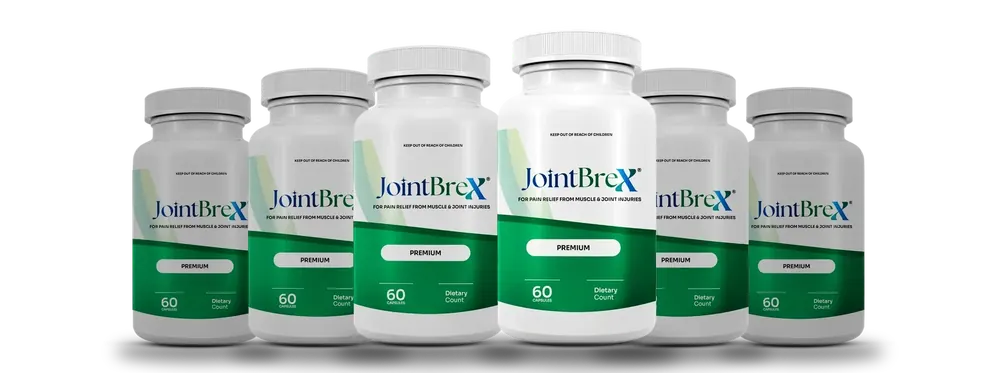
If you decide to try a capsule anyway, test it fairly.
JointBrex gives you 60 days from purchase to ask for a refund. Write your baseline first.
This site earns a commission when you order through its links. The price you pay does not change.
Do joint supplements help arthritis?
They are not treatments for arthritis. The most common kind is osteoarthritis, a slow breakdown of joint tissue. It affects about 33 million US adults and cannot be cured, though movement, a healthy weight and physical therapy help people manage it. (CDC, Osteoarthritis)
Rheumatoid arthritis is a different disease and needs a rheumatologist. Red, hot or swollen joints, or morning stiffness lasting beyond 30 minutes, are reasons to see a doctor and not to buy a capsule. (NIAMS, Osteoarthritis (health topic))
How do joint supplements supposedly work?
Sellers describe three jobs: rebuilding cartilage, calming inflammation and easing stiffness. The research behind each ingredient is narrower than that. The table shows what each was studied for.
| Ingredient | Studied for | What the sources found |
|---|---|---|
| Glucosamine sulfate | Knee osteoarthritis pain | No overall gain over placebo in GAIT. Gains mainly in trials of one prescription brand. (Cochrane 2005, Towheed et al., Glucosamine for osteoarthritis) |
| Chondroitin sulfate | Knee and hand osteoarthritis | At most a slight short-term pain change, from mostly low-quality trials. (Cochrane 2015, Chondroitin for osteoarthritis) |
| Boswellia extract | Osteoarthritis pain and function | Small trials of branded extracts, results varied widely. (BMC Complement Med Ther 2020, Yu et al., Boswellia meta-analysis) |
| Turmeric or curcumin | Knee pain | Early positive signs with absorption-boosted extracts. (BMJ Open Sport Exerc Med 2021, Paultre et al., Turmeric/curcumin for knee OA) |
| MSM | Joint pain and stiffness | Very limited research, uncertain benefit. (NCCIH Clinical Digest, Arthritis and Complementary Health Approaches) |
| Bromelain | Promoted for osteoarthritis | NCCIH lists no osteoarthritis evidence. (NCCIH, Bromelain: Usefulness and Safety) |
What do joint supplements do for cartilage?
Nothing proven. NCCIH says it is uncertain whether glucosamine or chondroitin changes joint structure, and any effect may be too small for patients to notice. (NCCIH, Glucosamine and Chondroitin for Osteoarthritis) In the GAIT structure study, joint space width behaved the same as on placebo. Chondroitin’s best structural result in Cochrane was 0.18 mm less narrowing over 2 years.
Memorial Sloan Kettering reports that turmeric left knee effusion and cartilage makeup unchanged in trials. (Memorial Sloan Kettering, Turmeric (About Herbs)) So “rebuilds cartilage” stays a marketing line.
Which joint ingredient has the best case?
Boswellia and turmeric extracts have the most hopeful signals, with caveats. Cochrane pooled 2 studies and 85 people on 100 mg of enriched boswellia extract for 90 days, and pain scores fell by about 17 points on a 0 to 100 scale. (Cochrane 2014, Cameron and Chrubasik, Oral herbal therapies for OA) A 2020 meta-analysis of 7 trials and 545 people also favored boswellia, but results varied wildly from trial to trial. (BMC Complement Med Ther 2020, Yu et al., Boswellia meta-analysis)
For turmeric, a review of 10 trials with 1,287 people found pain and function improved more than on placebo. (BMJ Open Sport Exerc Med 2021, Paultre et al., Turmeric/curcumin for knee OA) Another review pooled 11 trials with 1,258 adults. (Complement Ther Med 2021, High- vs low-dose curcumin in knee OA) The authors could not name the best dose, schedule or form. Both used enhanced extracts, which are not the same as plain root.
What do guidelines back more strongly than supplements?
- Exercise, matched to what your joints tolerate.
- Weight loss for knee or hip osteoarthritis when overweight.
- Tai chi.
- Self-management and self-efficacy programs.
- A cane, plus a hand or knee brace when it suits the joint.
That is the 2019 guideline from the American College of Rheumatology and the Arthritis Foundation, which strongly recommended against glucosamine. (Arthritis Rheumatol 2020, Kolasinski et al., 2019 ACR/AF OA guideline (abstract)) (NCCIH Clinical Digest, Arthritis and Complementary Health Approaches) The CDC target is at least 150 minutes of moderate activity a week, and bouts as short as 5 or 10 minutes count. (CDC, About Physical Activity and Arthritis)
Should I take joint supplements?
That is a conversation for your doctor, not a headline. A supplement is an add-on, not a swap for the steps above or for a medicine your doctor chose.
List what you take
Every prescription, over-the-counter pill and supplement, including fish oil or daily aspirin.
Show the label
Hand your pharmacist the full panel. Ask about bleeding and blood sugar.
Pick a repeatable test
The same stairs or the same 10-minute walk, scored at the same time of day.
Set an end date
Decide before you start when you will stop if nothing changes.
Where do JointBrex’s eight ingredients fall in the evidence?
Per 2 capsules, JointBrex gives glucosamine sulfate 1,000 mg against 1,500 mg in GAIT, chondroitin sulfate 100 mg against 1,200 mg, boswellia extract 133.3 mg inside the 100 to 250 mg range but not standardized on the label, turmeric root 100 mg where trials used enhanced extracts, and quercetin, methionine, MSM and bromelain at 16.7 mg each.
No study of the finished capsule exists. Only boswellia sits in a studied range. Our post on whether JointBrex works goes row by row.
Frequently asked questions
Do joint supplements really work?
The best trial found no overall gain over placebo for glucosamine and chondroitin. Boswellia and turmeric extracts show early signs, and the evidence is uneven.
Do joint supplements help with arthritis?
They are not treatments for arthritis. A 2019 arthritis guideline strongly backed exercise, tai chi, weight loss if needed and self-management, and recommended against glucosamine.
How do joint supplements work?
Sellers say they rebuild cartilage and calm inflammation. NCCIH calls any effect on joint structure uncertain, and most ingredients were tested for pain scores only.
What do joint supplements do?
At best they may give a small change in comfort. A high share of people on dummy pills also improve, so it is hard to credit a capsule.
Should I take joint supplements?
Talk to your doctor or pharmacist first, especially if you take a blood thinner, have diabetes or liver disease, or have a shellfish allergy.
How long do joint supplements take to work?
Trials ran from 4 weeks to several months, and the largest ran 24 weeks. No reliable start date exists for any product.
Our view
Do joint supplements work? The honest summary is: not clearly. The largest trial found no overall win for glucosamine or chondroitin, while the early signals for boswellia and turmeric extracts come from small trials of special products.
That does not mean no one benefits. It means a capsule is a weak bet next to movement, weight and know-how, and that you should test it with a plan, not a hope. Ask your doctor before you start.
No joint supplement is FDA approved, and none is meant to diagnose, treat, cure or prevent any disease. These statements have not been evaluated by the Food and Drug Administration.
Last updated . Written by the JointBrex Editorial Desk. Medically reviewed by Dr. Teo Mendez, MD, Physician on October 16, 2026.
Page check
Written by
Matches each amount to the printed Supplement Facts panel and each safety line to federal health agencies and Cochrane reviews.
- Reviewed against the label on October 16, 2026
- Sources: the Supplement Facts panel, the brand pages we opened, and the studies linked on this page
- Spotted a mistake? Email [email protected]. Our method is on the editorial standards page